The dispute between Midjourney and the Hollywood film studios is becoming one of the most important cases involving artificial intelligence and copyright law. While headlines often suggest that AI "steals" images, the reality is far more complicated.
Interestingly, in the latest stage of the case, it's not the film studios but Midjourney that went on the offensive.
Midjourney wants a look behind Hollywood's curtain
In the ongoing lawsuit, the company asked the court to compel Disney, Universal, and Warner Bros. to disclose documents on how they themselves use artificial intelligence.
Midjourney sought access to, among other things:
- internal AI-related strategies,
- research on the use of generative models,
- technical documentation,
- presentations prepared for company boards,
- information about the models and training data used.
The court ruled that most of these materials weren't directly relevant to the case and limited the scope of documents the studios must hand over. Midjourney disagrees with that decision and argues that how the plaintiffs themselves develop and use AI could matter for assessing their claims.
What's the lawsuit actually about?
The suit filed by Disney, Universal, and Warner Bros. rests on the claim that Midjourney infringes copyright because, in training its models, it used enormous amounts of copyrighted images. The studios also point out that users can generate images depicting characters that closely resemble well-known brands and characters owned by these studios.
Midjourney's answer is that training a model isn't about copying and storing images, but about teaching an algorithm to recognize relationships across billions of examples.
And that's exactly where we get to the heart of the matter.
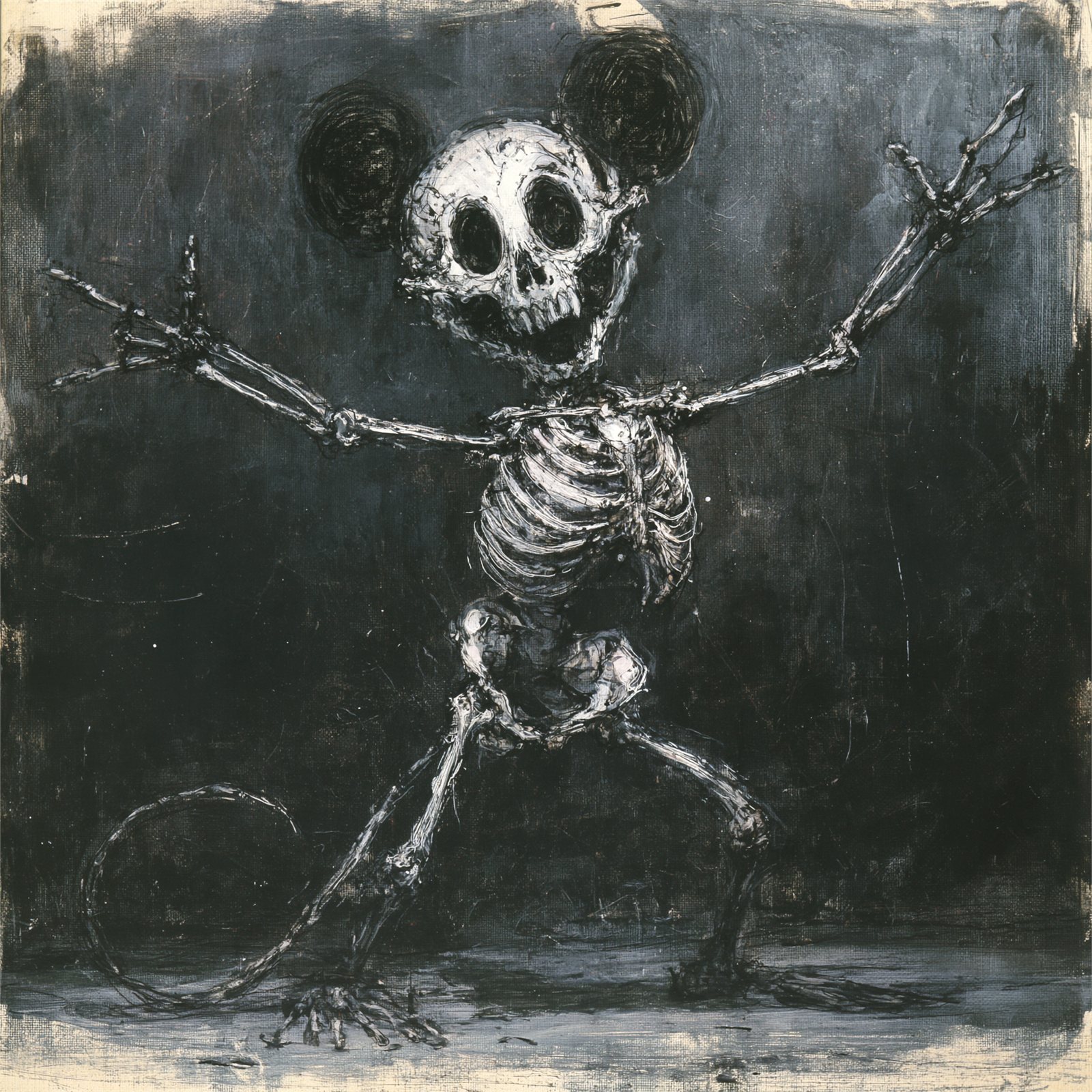
Does Midjourney store images?
This is one of the biggest myths about generative artificial intelligence.
Many people picture an AI model as a giant hard drive full of billions of images pulled from the internet. When you type a prompt, the model supposedly finds the right image and tweaks it slightly.
That's not how it works.
During training, images are analyzed by a neural network and then converted into mathematical relationships among millions — really, billions — of the model's parameters. Once training is done, there's no database of photos or collection of illustrations left for the AI to draw on when it generates new work.
The model remembers patterns — relationships between color, light, perspective, anatomy, composition, or style — not specific image files.
That's exactly why a new image is produced every single time, rather than a copy of an existing work.
AI learns in a way similar to humans
This is one of the main arguments raised by Midjourney and many AI experts.
A beginner illustrator learns by studying thousands of works by other artists. A photographer studies the photos of the world's best photographers. A painter studies the work of the old masters. A programmer reads code written by others, and a writer sharpens their craft by reading hundreds of books.
No one expects that, having read every book, an author is owed royalties simply because we learned something from it.
Our brain doesn't store every page we've read or every image we've seen as a faithful copy. Instead, we build knowledge, recognize patterns, and use what we've learned to create something new.
Supporters of AI argue that generative models work on a very similar principle. They don't store millions of images — they learn the statistical relationships between visual elements and use that knowledge to generate new compositions.
What would it mean if training AI counted as copyright infringement?
This question reaches far beyond the Midjourney case itself.
If courts were to decide that simply analyzing works during model training amounts to copyright infringement, a fundamental question would follow about the limits of learning itself.
After all, virtually every creative pursuit builds on earlier examples. Artists are inspired by other artists. Designers study the best work in their field. Musicians study the work of those who came before them. Filmmakers watch the classics of cinema.
Does that mean rights holders should be paid just for the process of acquiring knowledge?
Of course, AI's critics point out that there's a meaningful difference between a person learning from other creators and commercially training models on billions of works without a license. That's exactly the line being disputed today, and courts haven't drawn it clearly yet.
Why does Midjourney want to know what Hollywood is doing?
That's exactly why the company is demanding disclosure of how the film studios themselves use artificial intelligence.
If it turns out that they, too, develop their own models, analyze massive datasets, or use AI to support film production, Midjourney can argue that even the biggest copyright holders treat similar processes as acceptable in practice.
So this isn't just about curiosity — it's an attempt to show that the rules applied to Midjourney should apply to every player in the market, including the biggest film studios.
Why does this case matter so much?
Whichever side of the argument you're on, one thing is certain — the ruling could affect the entire generative AI industry.
The court will have to answer questions that seemed purely theoretical just a few years ago:
- Is training AI models on copyrighted works lawful?
- Where does learning from examples end and copyright infringement begin?
- Can a model that learns patterns be compared to a human developing their own skills?
- What obligations will companies building AI models have in the future?
This is no longer a dispute just about Midjourney. It's a case that could define the rules for how artificial intelligence develops for years to come.
And whatever the final ruling, one thing is worth remembering: an AI model is not a library of images or a search engine copying other people's work. What it does is learn relationships across billions of examples and generate new content from that acquired knowledge. Whether that process should be treated like human learning, or as a use that requires the copyright holders' consent, remains one of the most important questions facing the courts — and the entire AI industry — today.