A theory-free cheat sheet: 5 non-obvious Midjourney styles for 2026, each with a real example and a ready-to-use prompt. Swap in your own subject and generate.
1. Digital Maxxing
Digital maxxing is a style defined by the total absence of empty space in the frame: chrome, light reflections, and layered ornamentation cover every part of the image. The effect is dense and multi-layered - the opposite of minimalism.
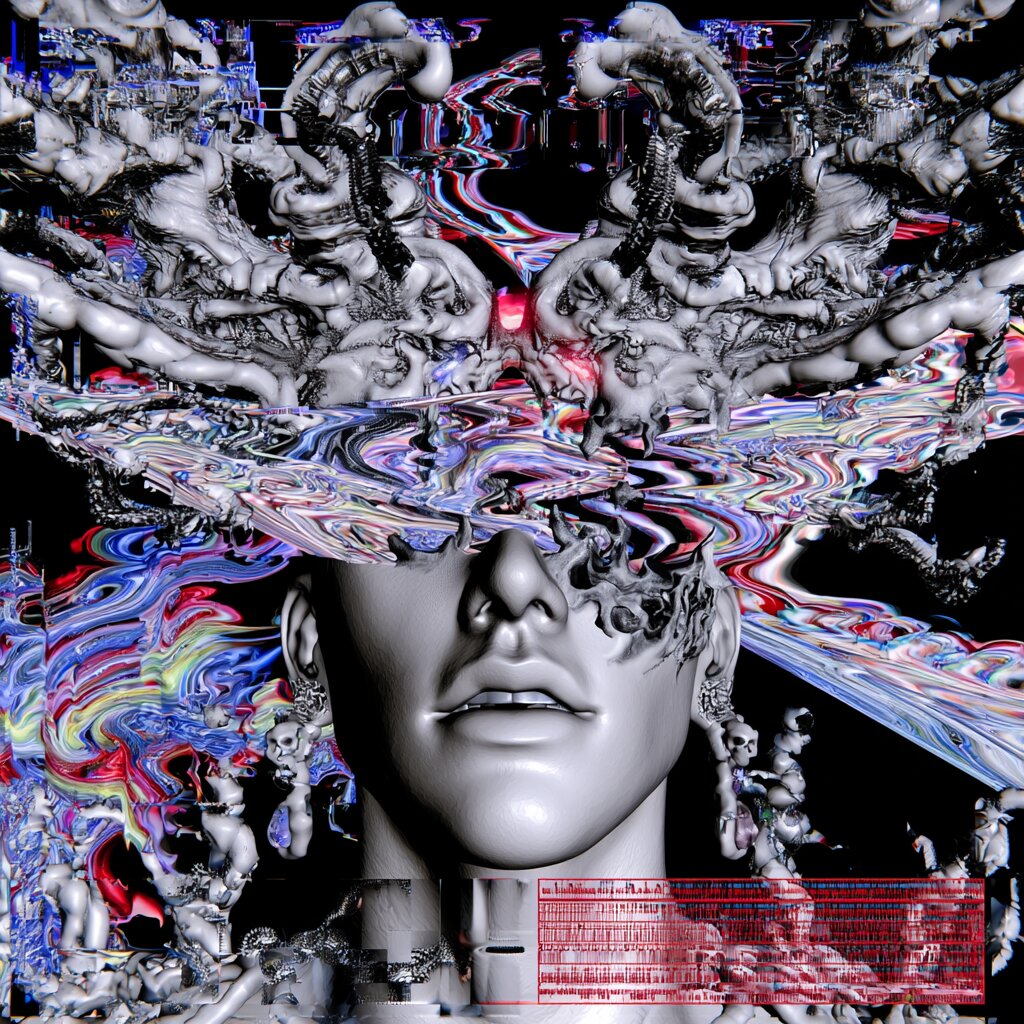
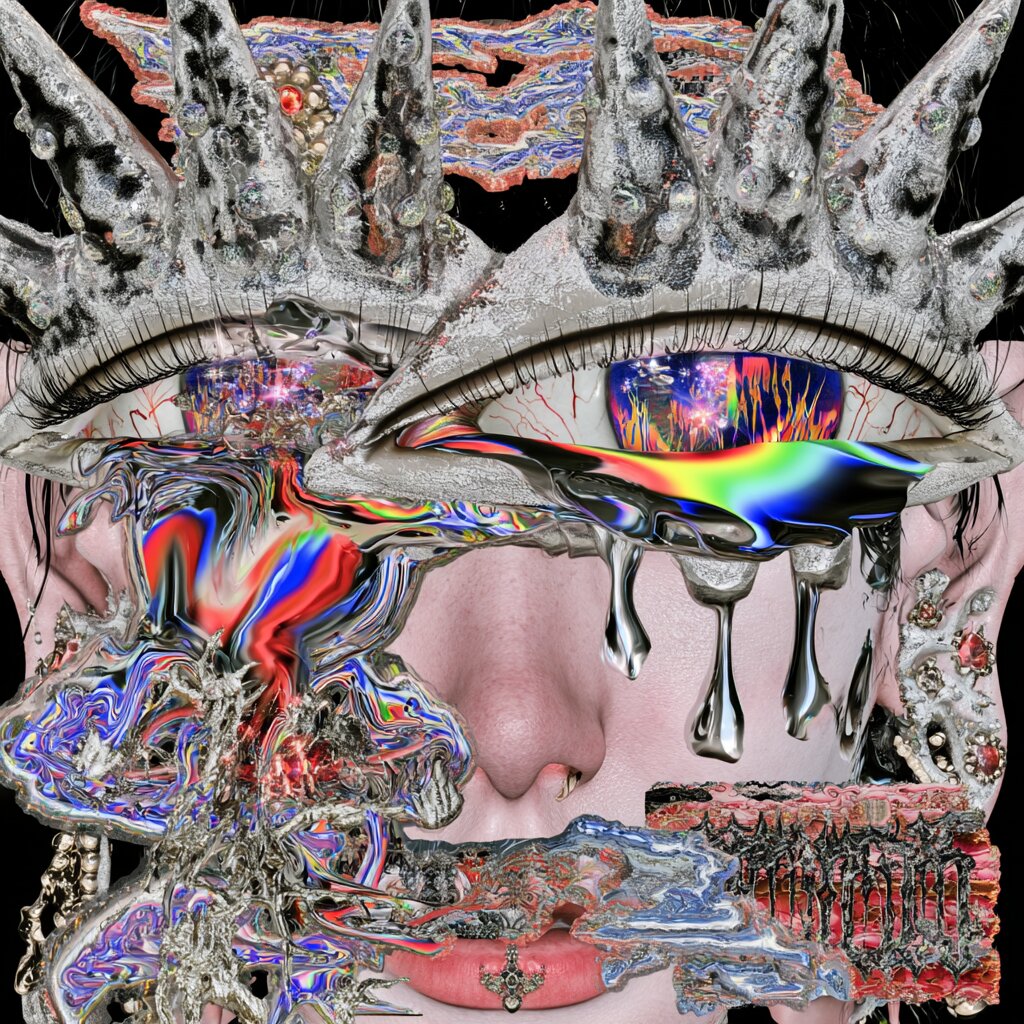
hyperdetailed chrome and iridescent textures, dense layered ornamentation, maximalist digital collage, glossy 3D render --ar 4:5 --stylize 750 --chaos 15
2. Organic Chrome
Organic chrome is a digital maxxing variant applied to a still life instead of a portrait: the same chrome, iridescent texture, but on subjects with a raw, bodily character (meat, tissue), often combined with metal elements like chains.
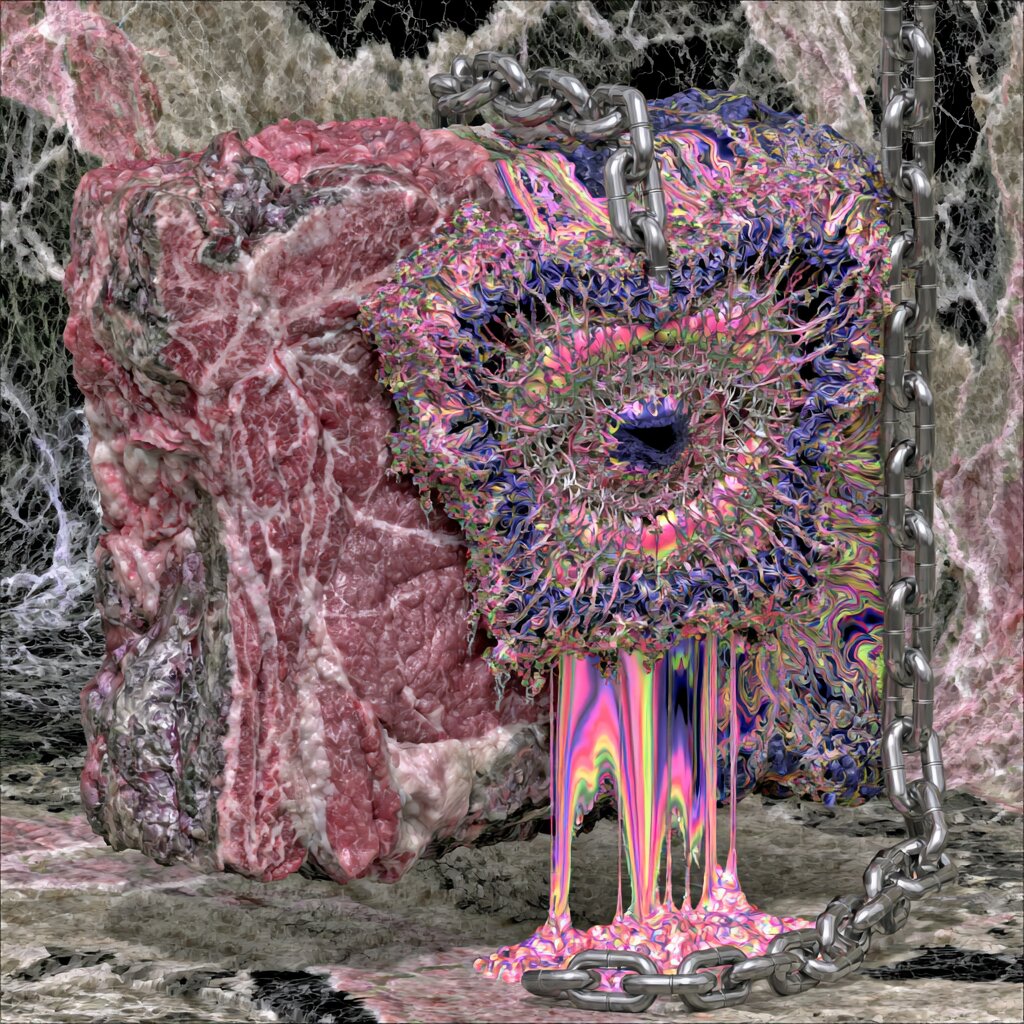
raw cut of marbled meat with a heavy metal chain draped across it, an iridescent chrome portal embedded in the flesh, liquid rainbow color pooling and dripping from the wound, hyperdetailed textures, glossy 3D render --ar 1:1 --stylize 700 --chaos 20
3. New Neon (acid duotone)
New neon is a two-color, high-contrast graphic style inspired by old screen printing and Japanese woodblock prints rather than glowing signage. The typical layout is a diptych made of two panels in different colors (usually acid yellow-green and electric blue), tied together by a shared motif, often a skull or a solitary silhouette.
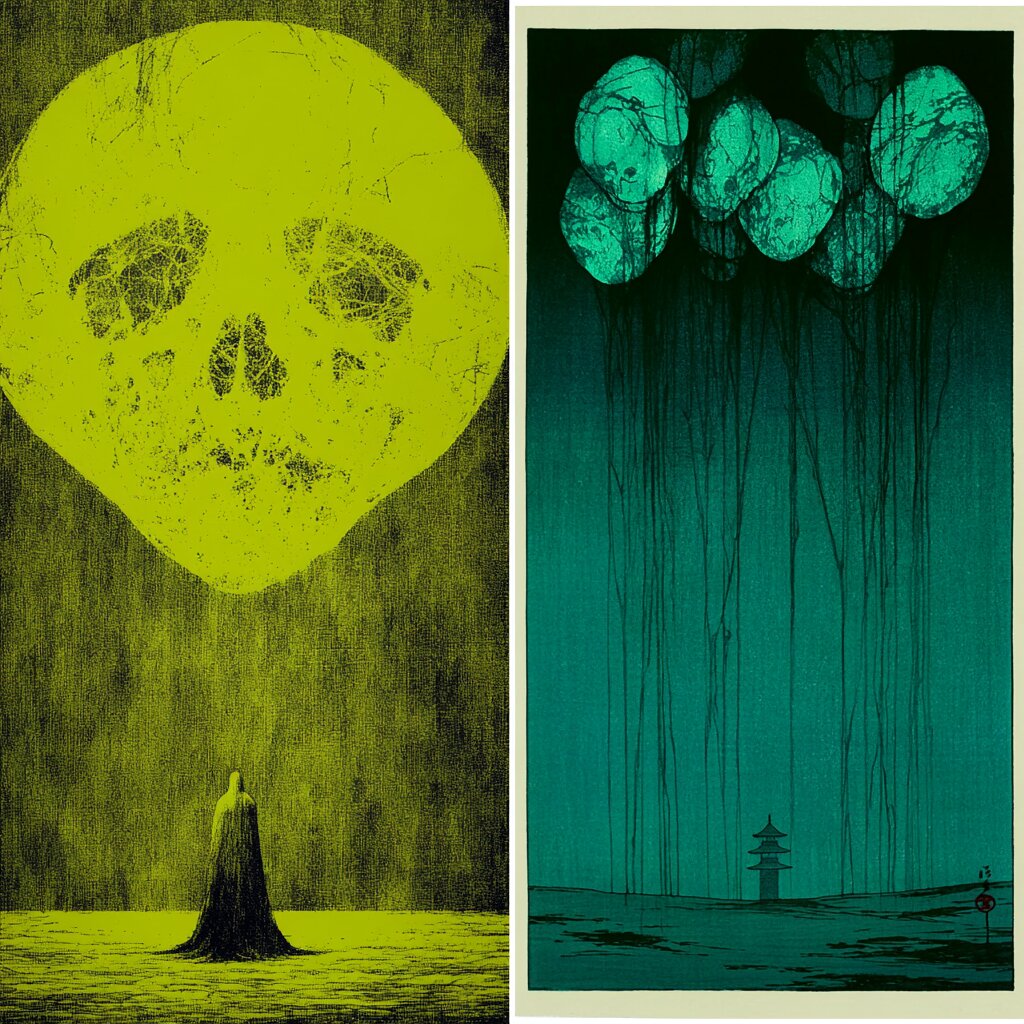
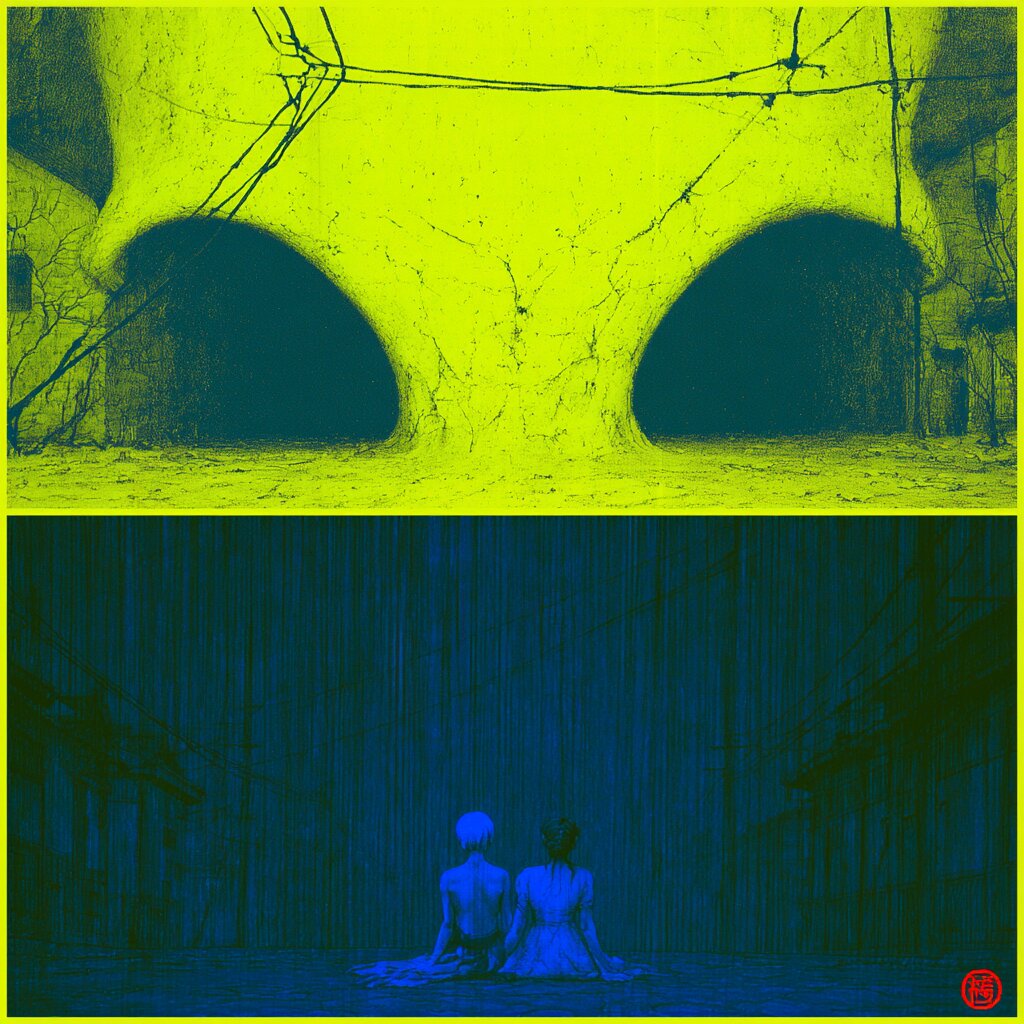
two-panel diptych poster, top panel acid yellow-green duotone, bottom panel electric teal blue duotone, ukiyo-e woodblock print texture, grainy halftone screen print, skull motif, solitary silhouette figure --ar 4:5 --stylize 400
4. Pink Death (Kawase Hasui × Beksiński)
Pink death is a style pairing the calm aesthetic of Japanese woodblock prints (in the spirit of Kawase Hasui) with the dark surrealism of Zdzisław Beksiński, in a palette of pink and blue instead of black. The skull motif is treated as part of the landscape, not an interruption of it.
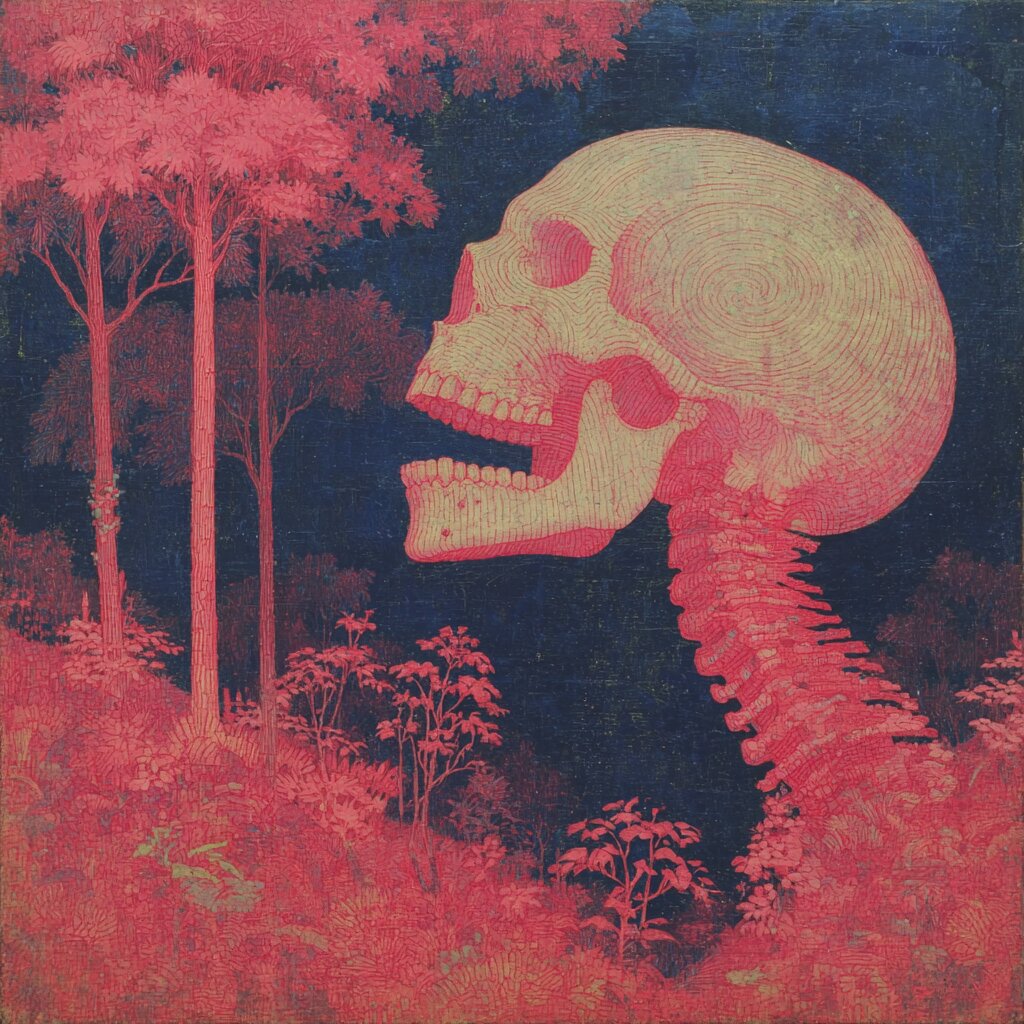
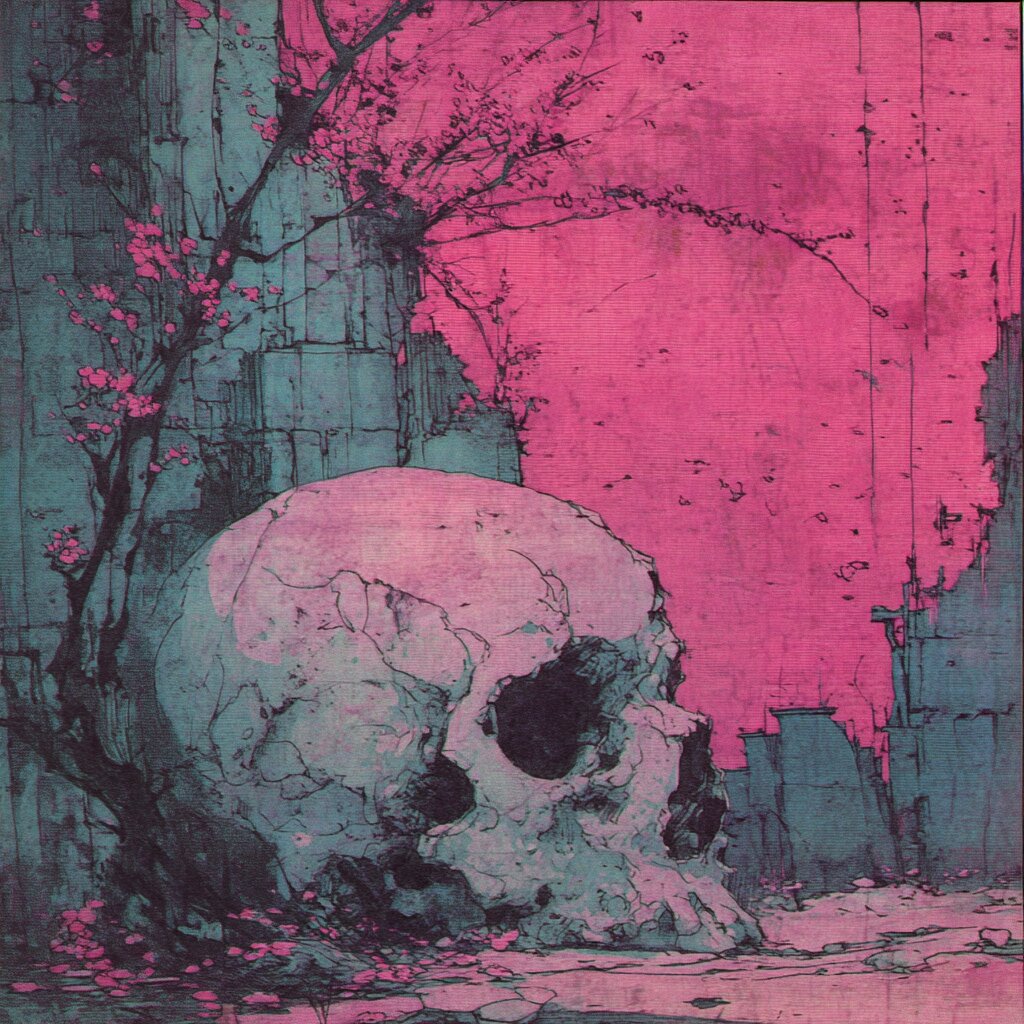
detailed engraved illustration of a skull in a forest clearing, cherry blossom branches, muted pink and cream color palette with deep navy background, fine linework texture like vintage anatomical prints, mixed style of Kawase Hasui ukiyo-e woodblock prints and Zdzisław Beksiński surrealism --ar 1:1 --stylize 300
5. Analog Paradox
Analog paradox is a style that pairs nostalgic film photography (faded colors, grain) with a massive, abstract form that visually doesn't belong in that mood. The key element is scale contrast: a small, calm figure in the foreground set against a giant, chaotic structure behind or above it.
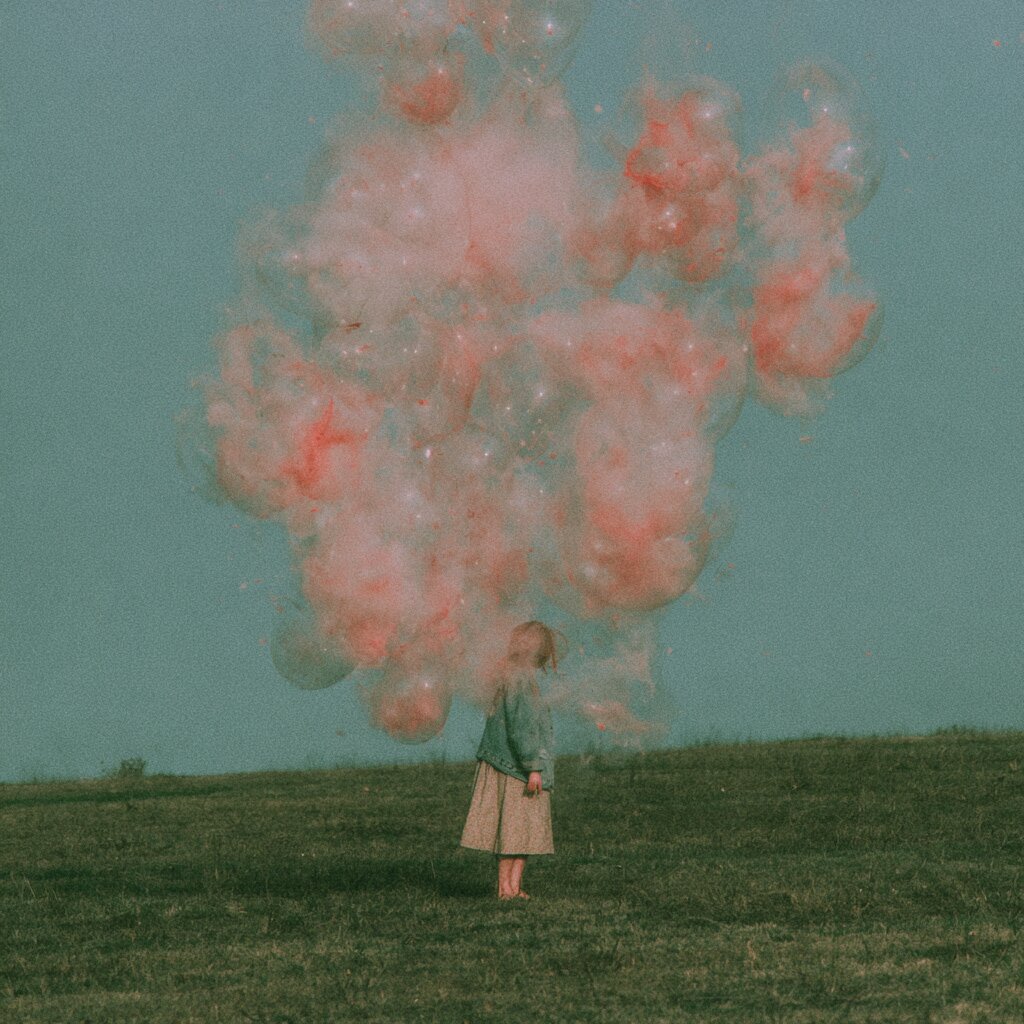
vintage 35mm analog photograph, faded nostalgic color grading, muted teal and olive tones, a young girl in vintage clothing standing in a field with her back to camera, looking up at a massive surreal cluster of translucent pink smoke bubbles frozen in the sky, dreamlike scale contrast, film grain --ar 1:1 --stylize 300
Looking for the wider context - where these styles came from and why these five? The full, expanded article is on blog.midjourneyart.pl.