The internet is full of "AI in 2027" forecasts, almost all written from an investor's or an analyst's point of view. This one is different: I don't care how big the market will be. I care about what changes in your day-to-day work if you're actually the one sitting at a keyboard writing prompts. Five concrete things, each with a real source, each paired with something you can do about it right now.
Video and 3D are coming - do you need to care right now
Midjourney CEO David Holz says openly where this is headed: from image, through video, to interactive 3D worlds running in real time[1]. This isn't a rumor - it's the company's stated direction, backed by a dedicated hardware team[2].
The practical answer: you don't need to learn video generation today, but it's worth starting to pay attention. Composition, lighting, style description - everything you're learning now with still images carries straight over into video. The fundamentals don't change, only the medium does.
The tool you rely on can disappear - the lesson from Sora
Sora, OpenAI's video model, launched publicly on February 1, 2026. Its shutdown was announced March 24. By April 26 it had stopped working - after 84 days[3]. The reason: compute costs outran what people were willing to pay[4].
The law is catching up with the industry - and that includes you
Disney, Universal and Warner Bros. Discovery sued Midjourney in 2025 over the model generating recognizable characters, like Superman or Batman, a little too readily. Discovery closes in September 2026, and a real ruling likely won't land until 2027[5].
For you, that means one thing: if you generate images featuring specific, protected characters and sell them or use them commercially, the risk is rising, not shrinking. This isn't about fear, it's about consciously choosing when it's worth brushing up against someone else's intellectual property, and when you're better off building something of your own.
Content labeling: not optional anymore
I wrote about this at length in a separate post on the AI Act, so just a reminder here: since August 2, 2026, EU law requires labeling AI-generated content, and this specific deadline wasn't pushed back along with the rest of the rules[6]. If you do this professionally, not just as a hobby, it's worth knowing exactly where you stand.
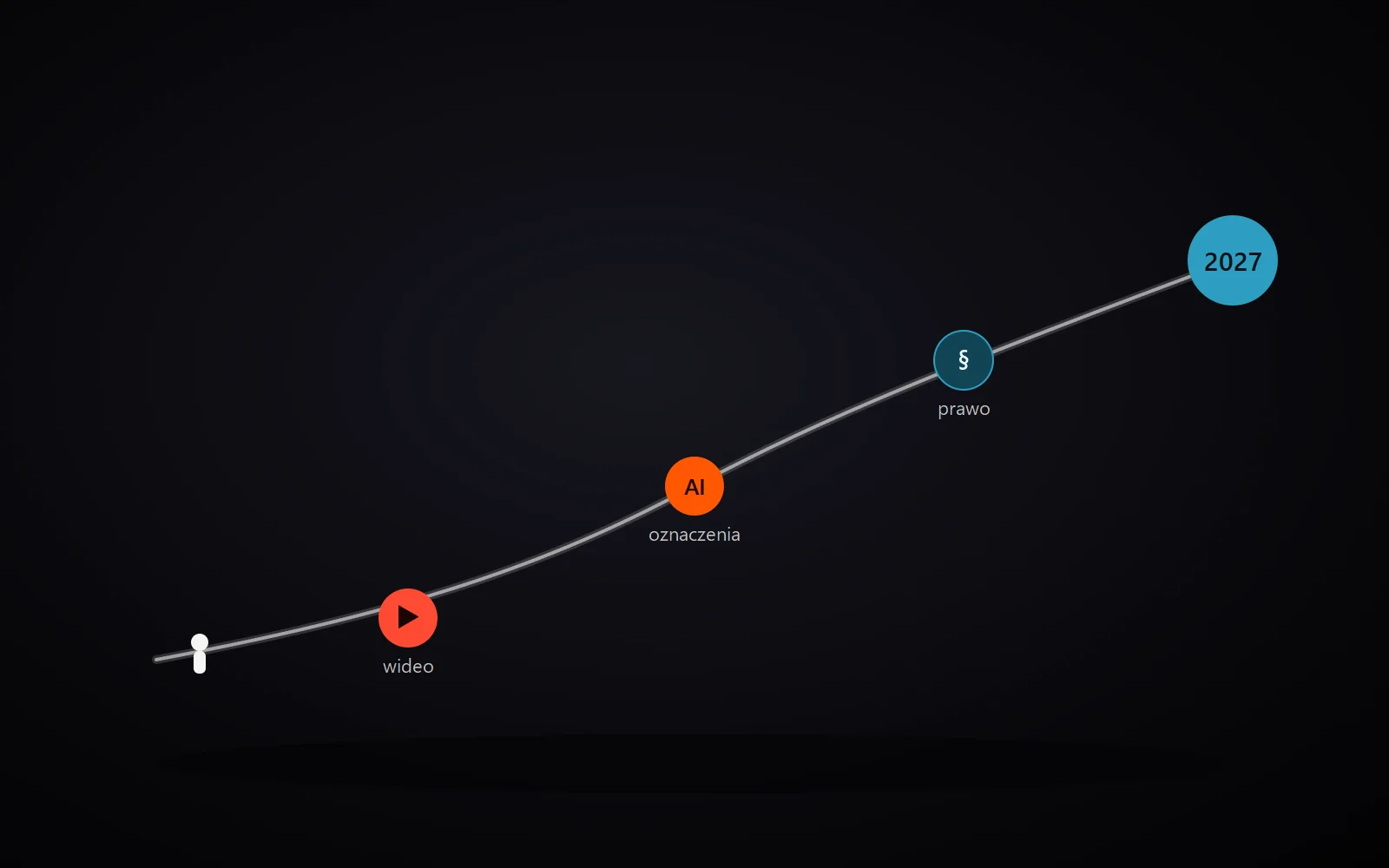
Three markers on the road to 2027 - none of them a surprise if you know where to look
What you can do right now
- ☐ Don't build your whole workflow around one tool's specific trick - learn the principles, not the shortcuts
- ☐ Start paying attention to video tools, even if you're not using them seriously yet
- ☐ Avoid generating and selling images featuring recognizable characters that aren't yours
- ☐ If you work commercially, check whether the AI content-labeling obligation applies to you
- ☐ Stick to the fundamentals - subject, style, lighting, parameters, in that order - that's the one thing that won't go out of style in 2027
Frequently asked questions
Should I start learning video generation now?
You don't have to, but it's worth watching. The composition and lighting principles you're learning with images today will carry straight over to video when the time comes.
Will Midjourney disappear the way Sora did?
Nothing points that way - Midjourney is self-funded, unlike Sora[7]. The lesson stays the same regardless: don't rely on a single tool alone.
Do I have to label my AI images as a private individual?
It depends how you use them. The full explanation, with a real distinction between hobby use and professional activity, is in the separate post on the AI Act.
Sources
- Level Up Coding, "David Holz Shared His Long-Term MidJourney Vision"
- Press Farm, "Midjourney's Next Act"
- Wikipedia, "Sora (text-to-video model)"
- TechCrunch, "OpenAI's Sora was the creepiest app on your phone - now it's shutting down"
- The Art Newspaper, "Midjourney strikes back: sued AI giant demands Hollywood's secrets"
- Gibson Dunn, "EU AI Act Omnibus Agreement - Postponed High-Risk Deadlines"
- ValueAdd VC, "$500M ARR, 0 Funding - How Midjourney Works"