Over the past two years, I keep seeing the same pattern: people using Midjourney the way they learned it in 2023. Type a prompt, look at a grid of four images, pick the best one, upscale. Done. Meanwhile, the tool they're working with has become something else entirely.
I'm not saying this to make anyone feel bad. I'm saying it because I was stuck in the same place for a while — and I know that the gap between "using Midjourney" and "understanding Midjourney" is now measurable in the quality of finished work.
Midjourney V7 and V8: what it actually means in practice
V7 isn't just another iteration with better resolution. It's a fundamental shift in how the model interprets the intent behind a prompt. Earlier versions would frequently drop secondary elements or reinterpret them on their own terms. V7 follows complex, multi-element prompts far more consistently — which in practice means fewer attempts, less waste, and more control over the final result.
V8 (currently available in alpha) goes a step further: native 2K resolution, a --hd mode, and noticeably stronger spatial logic — objects hold their proportions and positions in the frame in ways that previously required multiple iterations and a fair amount of luck.
Is this a revolution? No. But for someone working with Midjourney daily who understands the parameters — it's a meaningful jump in efficiency.
The market shifted: Midjourney is no longer the only player
This is the part most "Midjourney tutorials" avoid because it complicates the narrative. In 2026, the generative visual AI landscape looks completely different from two years ago.
Flux 2 Pro beats Midjourney on photorealism. Imagen 4 from Google handles faces and anatomical detail more reliably. Ideogram V3 dominates in-image text rendering — something Midjourney still struggles with. DALL-E 4o is more predictable for users who don't want to learn parameters.
Midjourney holds its position with something none of the above convincingly replicate: aesthetic judgment. If you care about an image looking like something someone consciously designed — rather than a photorealistic reconstruction of a prompt — Midjourney is still the tool of choice.
For digital creators, artists, designers, and anyone building a distinct visual identity: that distinction matters enormously.
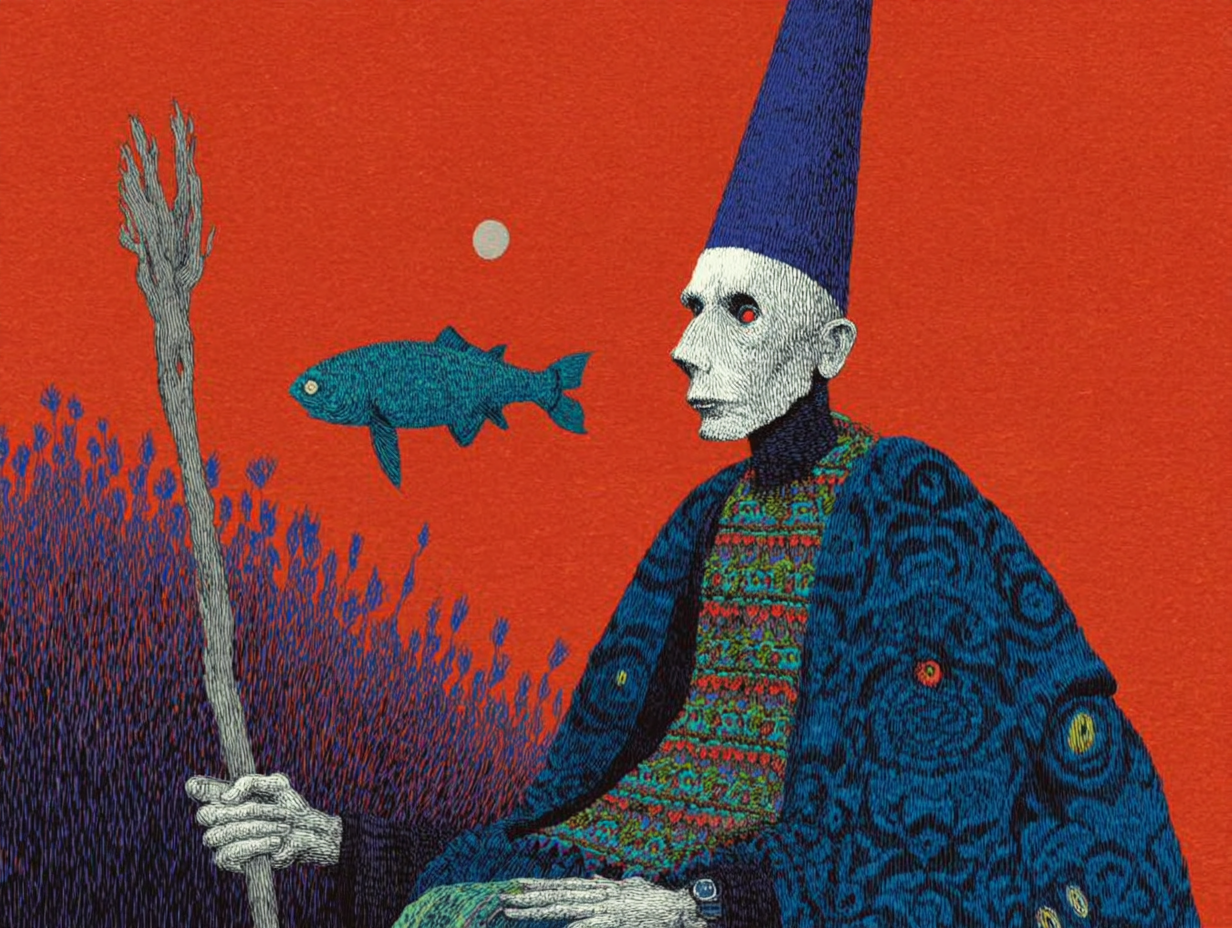
Midjourney is still a powerhouse in genAI world!
Image-to-video: where things actually stand
Midjourney released its first video model in mid-2025. That's good news and bad news at the same time.
Good news: Midjourney's static frames are now a strong starting point for increasingly capable video pipelines — tools like PixVerse and Kling can animate a Midjourney image while preserving much of the original aesthetic.
Bad news: Midjourney's native video capabilities are still limited. No motion control tools, short clips, artifacts when animating fine details. The convergence of image and video is real — but for now it requires combining several tools, not just one.
Good news for anyone who already knows Midjourney: you're one step ahead. The ability to generate high-quality static images is the foundation for any AI-based video workflow.
Prompt engineering in 2026: what actually works
The most common mistake I see from people learning Midjourney on their own: they focus entirely on describing content and ignore technical parameters. Yet it's precisely the combination of parameters — --stylize, --chaos, --weird, --style raw — that determines whether Midjourney interprets your prompt creatively or follows it literally.
There's no single golden formula. What there is: an understanding of which parameter does what and why — and the ability to match settings to a specific project. That's the difference between generating images and designing with AI.
What this tells us about generative AI more broadly
Anyone paying close attention to the genAI tools market sees the same pattern: tools democratize a certain entry threshold, but they don't eliminate the advantage of knowledge and experience. If anything, they amplify it.
Someone who understands what's happening under the hood in Midjourney can produce in an hour what someone without that knowledge will spend a whole day on. And then again. And again.
That's why investing in learning — not in subscriptions to the next new tool, but in genuinely understanding the ones you already use — pays off faster than most people expect.
If you feel like you've lost the thread somewhere along the way and want to put it all together properly — I run Midjourney training that covers the tool as it actually exists today, not its 2023 version. Details here: szkoleniemidjourney.pl →